In South Africa, rooibos is simply there. It's in the office kitchen, in your gran's cupboard, and in a flask at every school sports day. It's so ordinary here that it's easy to forget how particular it is: one species of shrub, from one corner of the country, with a name the European Union now protects.
Here's how a mountain shrub got from the Cederberg to that EU register.
One plant, one corner of the country
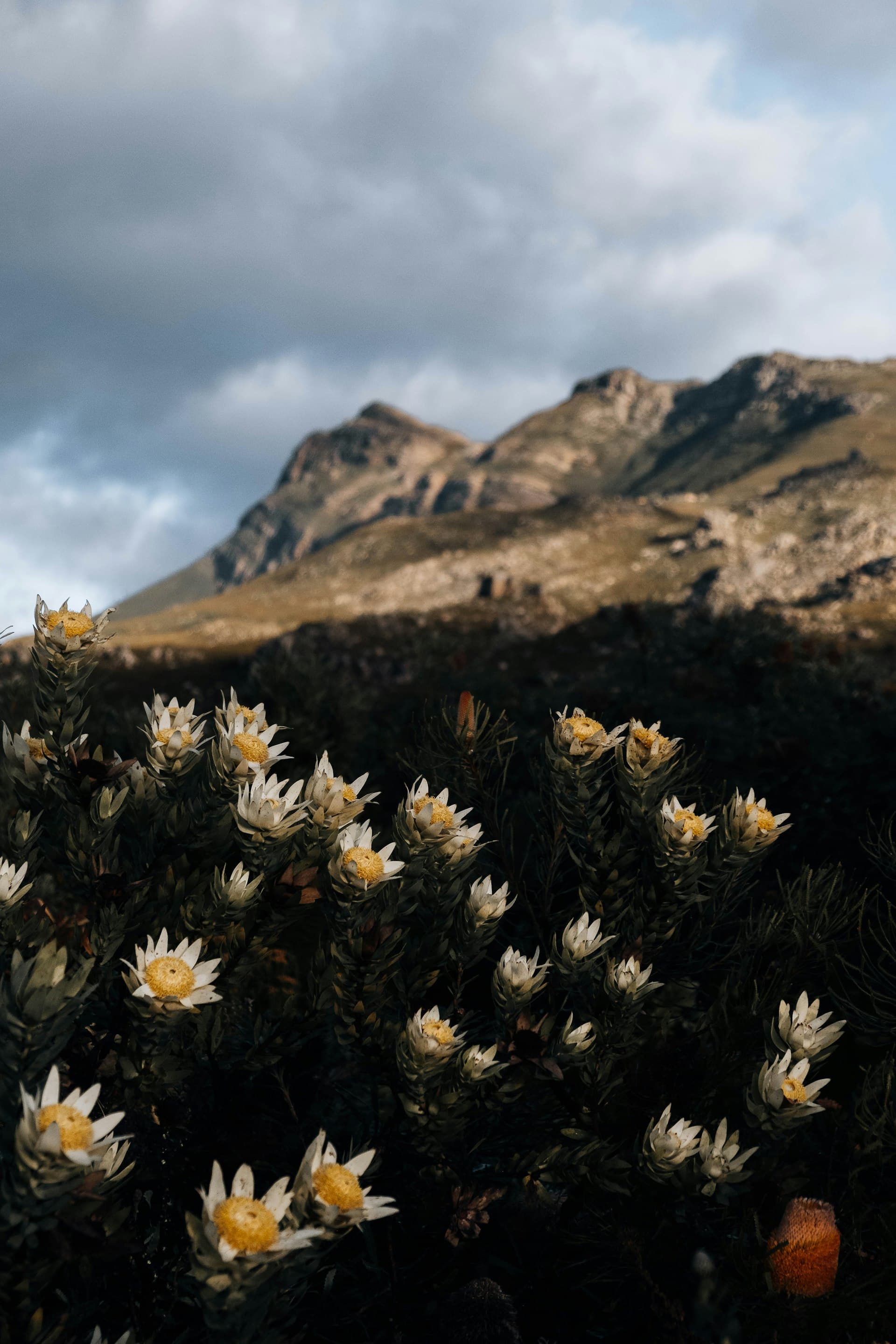
Rooibos comes from Aspalathus linearis, a shrub that grows naturally in the western mountains of the Western Cape.[1] Its natural range runs from about Vanrhynsdorp in the north to the Cape Peninsula and Betty's Bay in the south, a winter-rainfall area with cold, wet winters, hot, dry summers and only about 300 to 350 mm of rain a year.[1]
The tea itself is made from selected forms of the plant found mainly in the Cederberg mountains, and it's farmed on sandy soils in the valleys of the Olifants, Breede and Hex rivers.[1]
Up close, it's an unassuming plant: a variable shrub up to 2 m tall, with reddish young branches, green needle-like leaves and small yellow flowers in spring and early summer.[1]
From veld tea to trade
According to SANBI, rooibos "was first used by the indigenous people of the Cederberg area".[1] The SA Rooibos Council records a few milestones after that:[2]
1772: Carl Thunberg, a European botanist visiting the Cape, reported on the plant and the drink made from it.
1904: Benjamin Ginsberg, a Russian immigrant, saw the potential of this "mountain tea", started trading it and became the first exporter of rooibos.
Early 1900s: Dr Le Fras Nortier, a medical doctor and nature lover, started researching the plant's agricultural potential.
1930s: rooibos was first grown as a commercial crop.
1995: green rooibos was developed by the Agricultural Research Council's Infruitec unit.
2006: a rooibos espresso, which the Council calls the world's first tisane-based espresso, reached coffee shops.
How the red gets into rooibos
The colour isn't in the leaves when they're picked. It develops during processing. SANBI describes a method that has stayed largely the same for centuries:[1]
Only the young branches are cut, and the older growth is left on the bush.
The cuttings are chopped very finely, then bruised to start the chemical reaction that develops the colour and flavour.
After watering and airing, the tea is left to "sweat" in heaps. This is the step where it turns reddish-brown and develops its sweet flavour.
It's spread out in a large yard to dry in the sun, then sorted and graded by length, colour and flavour.
Farmers plant the seed in February and March, and it takes 12 to 18 months before a bush can be harvested. Each plant is harvested once a year, from December to April, for up to about five years, then replaced.[1]
The name the EU protects
On 28 May 2021 the European Commission entered "Rooibos" and "Red Bush" in its register of protected designations of origin (PDO).[3] It was published in the Official Journal of the EU on 31 May 2021.[3][4]
According to the EU delegation to South Africa, rooibos was the first African food to get this status.[4] A PDO is stricter than the EU's other origin label, the protected geographical indication (PGI). The Western Cape government explained that for a PDO, "every production, processing, and preparation aspect must take place in that specific origin".[4]
In practice, that means tea can't be called rooibos unless it was grown or wild-harvested in the designated municipalities of the Western and Northern Cape.[4] A PGI, by contrast, only needs one stage of production to happen in the place of origin.[4]
The provincial government said it had worked with the rooibos industry since the 1990s to stop the name being misused.[4] At the time, the SA Rooibos Council said the industry provided income and jobs for about 8,000 agricultural workers.[4]
Not under threat, but under pressure
The species itself isn't threatened, but SANBI notes that wild populations are shrinking. Land is being converted to rooibos plantations to meet demand, and overgrazing, invasive alien plants, climate change and uncontrolled wild harvesting also take their toll.[1]
That's worth remembering the next time you're choosing between brands. When the label tells you where and how the tea was grown, you know which part of the story you're buying into.
Browse local stores
Find independent stores near you on Herbal Habits.
Sources
Every fact in this article comes from one of these. The numbers in the text link here.
- 1.Aspalathus linearis. PlantZAfrica, South African National Biodiversity Institute (Marcini Govender), June 2007. Accessed 25 September 2026.
- 2.Rooibos History. South African Rooibos Council. Accessed 25 September 2026.
- 3.Commission Implementing Regulation (EU) 2021/865 of 28 May 2021 ('Rooibos'/'Red Bush' (PDO)). EUR-Lex, Official Journal of the European Union L 190, 31 May 2021. Accessed 25 September 2026.
- 4.South African Rooibos makes list of EU's protected designations. SAnews (South African Government News Agency), 10 June 2021. Accessed 25 September 2026.
Found this useful?