Your first windowsill herb garden will not go perfectly. Nobody's does, including the people with spreadsheets. The good news is that most beginner problems come down to two things you control: light and water. Get those roughly right and herbs forgive a lot.
This guide pulls together advice from two horticulture sources, Iowa State University's extension service and the Chicago Botanic Garden, then turns the map around for South Africa. More on that below.
Start with the window, not the herbs
Light is the thing most likely to hold you back. Iowa State puts it plainly: "Light is typically the most limiting factor to successfully growing herbs indoors."[1] Most herbs want around eight hours of direct light a day indoors, and some cope with about six.[1]
Here's the South African part. Both guides are written for the northern hemisphere, where the sunny side of a house faces south. Down here it's the other way round: in the southern hemisphere, north-facing windows are the best spot for growing plants.[3] So when a guide says "south-facing", read "north-facing".
If your brightest window only faces east or west, that can still work.[1] If you have nothing bright at all, a small grow light helps. Iowa State suggests full-spectrum lights 15 to 30 cm from the leaves, on a timer for 12 to 16 hours a day.[1]
Pick herbs that like living indoors
Some herbs handle indoor life better than others, because they cope with lower light, drier air and cooler rooms.[1] Iowa State's list of the best herbs to start with:[1]
parsley
mint
chives
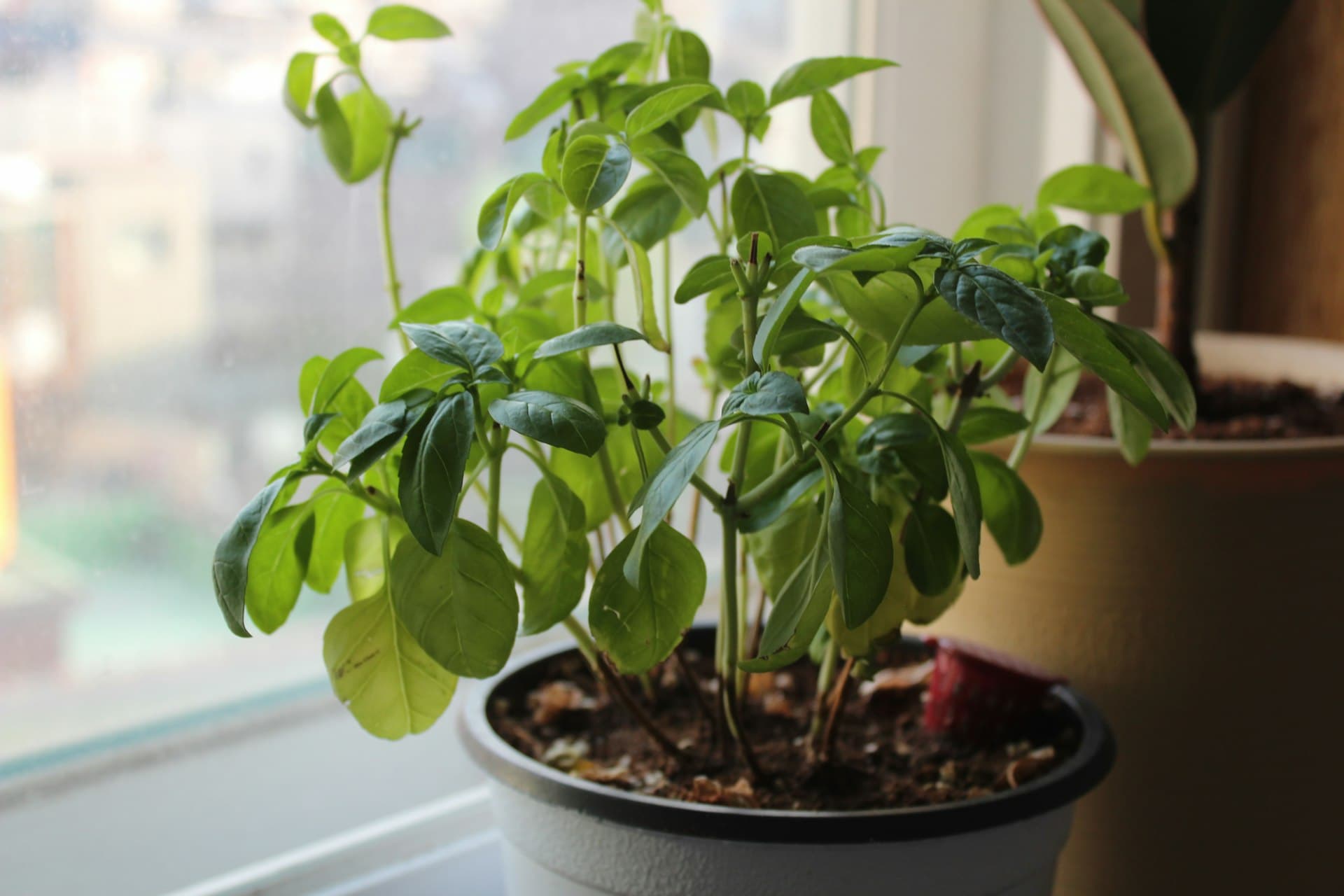
basil
oregano
coriander (the guide calls it cilantro)
thyme
Rosemary, sage, lemon balm and bay can work too, but they need more light and are more prone to pests such as spider mites indoors, so save them for round two.[1]
Pots and soil
Three rules cover most of it:
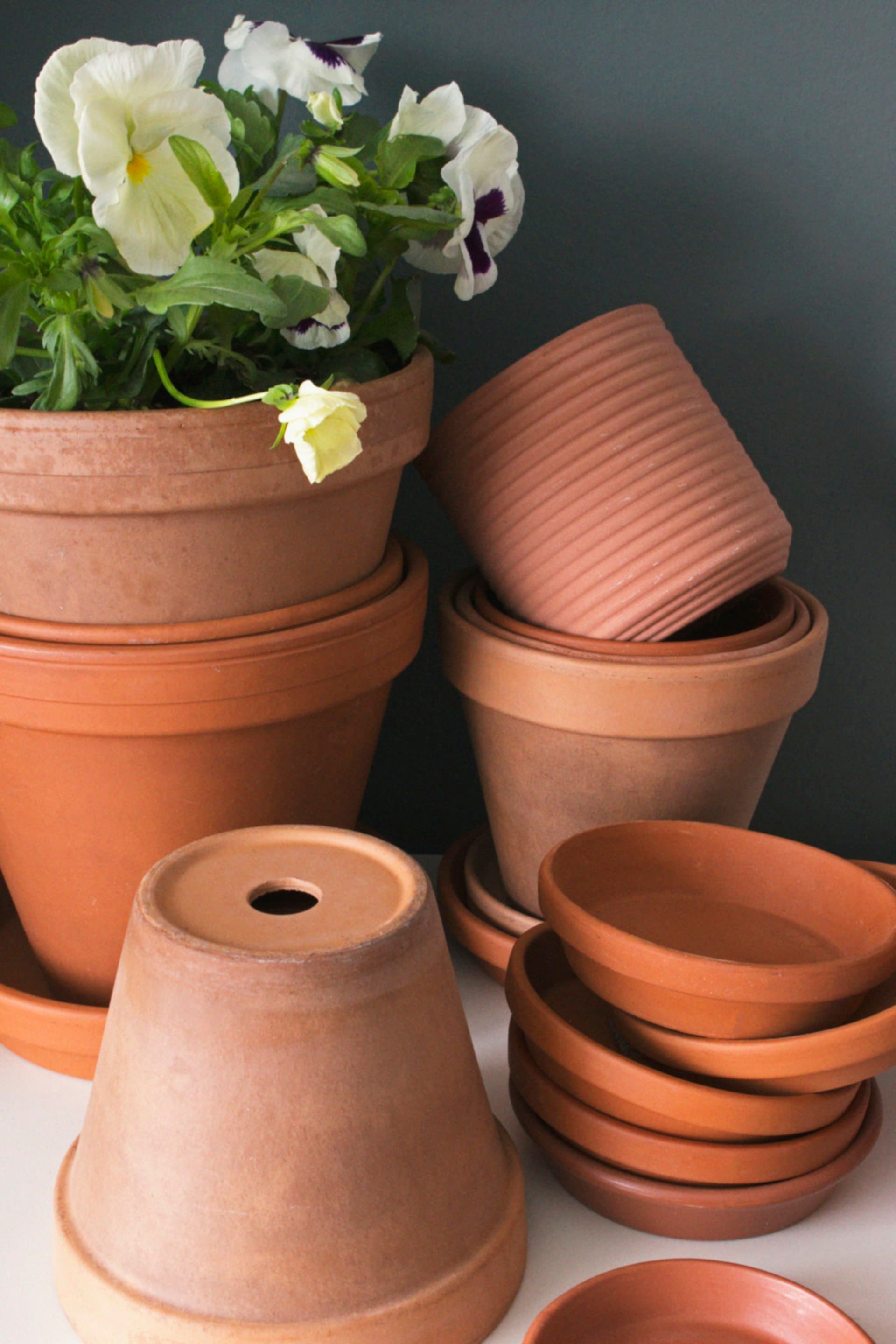
Drainage holes, always. Pots need to drain well, with a well-drained potting mix.[1][2]
Don't go too big. Oversized pots stay wet for too long.[1]
One herb per pot. It's hard to give different herbs the conditions they each need in a shared container.[1]
Clay or terracotta pots are a good choice because they're porous and dry out faster.[1]
Watering: less than you think
Let the soil dry out between waterings, because most herbs don't cope with wet soil.[1] Thyme, chives, oregano and rosemary are happy on the dry side.[2]
Basil is the odd one out on temperature. The Chicago Botanic Garden notes that all herbs except basil do best next to a cool windowpane.[2] Give basil the warmer spot.
Feeding
Herbs need less fertiliser than most container plants. Iowa State recommends an all-purpose fertiliser at half or quarter strength, from early spring through summer, and none in winter.[1] Remember our seasons are the mirror image of the northern hemisphere's,[3] so that's roughly September to February here.
Seeds or seedlings?
Basil, parsley and coriander do best indoors when grown from seed.[2] The plants stay smaller than garden ones, but you can start picking within a couple of weeks.[2] Other herbs are best started from cuttings or divisions.[2]
Harvest like you mean it
Picking regularly keeps plants bushy. The Chicago Botanic Garden advises pinching plants often to keep them "stocky and attractive".[2]
Leafy annuals such as basil and parsley can be cut back hard. Cut just above a leaf or pair of leaves, and leave about 10 to 15 cm of stem to regrow.[1]
Perennials such as chives, mint, oregano and thyme: take only the top third.[1]
After several harvests, annual herbs start to tire. Iowa State suggests replacing them with new plants from seed.[1]
Pests to watch for
Check new plants for aphids and spider mites. If you spot them, the Chicago Botanic Garden suggests spraying the plant with lukewarm water or dunking it for 15 minutes, and using insecticidal soap only for bad cases.[2]
Will it taste the same?
Mostly. Iowa State notes that many indoor herbs are milder than outdoor ones, then adds: "basil will always taste like basil whether it is grown indoors or outdoors."[1] We'll take it.
In part 2 of this series we head outside, to indigenous plants that handle South African sun and dry spells better than most imports.
Need pots or seedlings?
Find independent stores near you on Herbal Habits.
Sources
Every fact in this article comes from one of these. The numbers in the text link here.
- 1.Growing Herbs Indoors. Iowa State University Extension and Outreach, Yard and Garden, Last reviewed November 2023. Accessed 25 September 2026.
- 2.Growing Herbs on Your Windowsill. Chicago Botanic Garden. Accessed 25 September 2026.
- 3.Best Lighting Practices. Back to the Roots. Accessed 25 September 2026.
Found this useful?